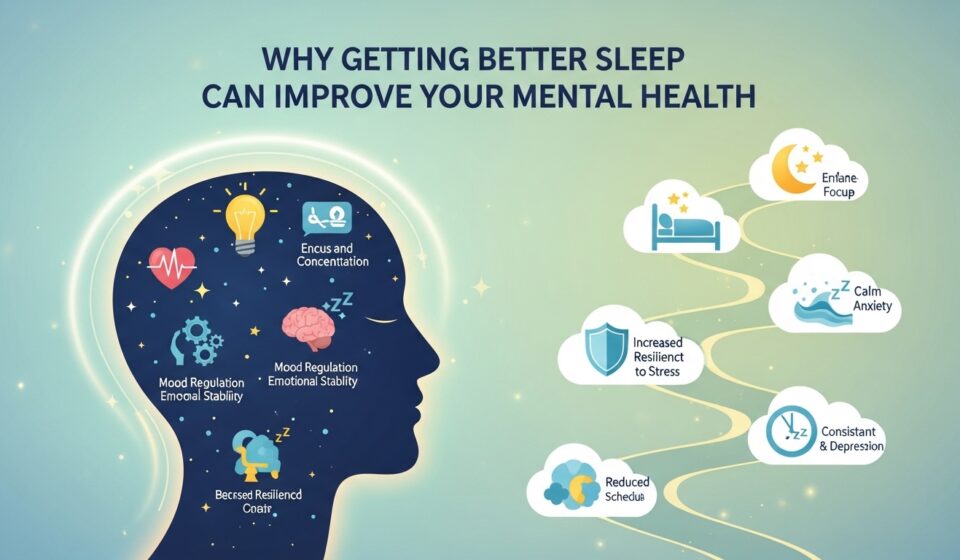

Sleep is often treated like a “bonus” in modern life, but in reality, it is one of the most important pillars of mental health. In 2026, with increased screen time, busy routines, and constant digital stimulation, sleep problems are more common than ever. Many people underestimate how strongly sleep affects mood, focus, stress levels, and emotional stability.
Improving your sleep is not just about feeling less tired—it can directly transform your mental health. Let’s understand why getting better sleep can improve your mental well-being and how it works inside your brain and body.
How Sleep Affects the Brain and Emotions
Sleep is the time when your brain processes information, resets emotional balance, and repairs itself. When sleep is poor, these systems start to break down.
During good sleep:
- The brain organizes memories and learning
- Emotional responses become more stable
- Stress hormones are regulated
- Focus and decision-making improve
During poor sleep:
- Emotional control becomes weaker
- Stress levels increase
- Negative thinking becomes more common
- Anxiety symptoms can worsen
This is why even one bad night of sleep can make you feel irritated or emotionally sensitive the next day.
Better Sleep Reduces Stress and Anxiety
One of the biggest mental health benefits of good sleep is reduced stress.
When you don’t sleep well, your body produces more cortisol, the stress hormone. High cortisol levels keep your brain in a “fight or flight” state, even when there is no real danger.
Better sleep helps by:
- Lowering cortisol levels
- Calming the nervous system
- Reducing physical tension
- Improving emotional stability
Over time, consistent good sleep can significantly reduce anxiety symptoms.
Sleep Improves Mood Stability
People who sleep well tend to have more balanced moods throughout the day. Poor sleep, on the other hand, makes emotions unpredictable.
Effects of poor sleep on mood:
- Irritability
- Mood swings
- Low patience
- Feeling overwhelmed easily
Effects of good sleep:
- More emotional control
- Positive mindset
- Better resilience to stress
- Increased patience
Sleep acts like a natural mood stabilizer for the brain.
Better Sleep Enhances Cognitive Function
Mental health is not only about emotions—it also includes thinking ability, focus, and clarity.
When you get quality sleep, your brain performs better in many ways:
- Improved concentration
- Faster decision-making
- Better problem-solving skills
- Stronger memory retention
Without enough sleep, the brain struggles to process information, leading to confusion and mental fatigue.
Sleep Helps Prevent Depression Symptoms
Research shows a strong connection between sleep quality and depression. While sleep alone does not cure depression, it plays a major role in managing symptoms.
Poor sleep can:
- Increase negative thoughts
- Reduce motivation
- Lower energy levels
- Affect emotional regulation
Better sleep supports:
- Emotional balance
- Mental clarity
- Motivation and productivity
- Positive thinking patterns
Improving sleep habits is often part of mental health treatment plans.
Sleep Regulates Brain Chemicals
Your brain relies on chemicals like serotonin, dopamine, and melatonin to regulate mood and sleep cycles.
How sleep affects these chemicals:
- Serotonin helps regulate mood and happiness
- Dopamine influences motivation and reward
- Melatonin controls sleep cycles
When sleep is disrupted, these chemicals become imbalanced, leading to emotional instability and mental fatigue.
Better Sleep Improves Stress Recovery
Every day, your brain experiences stress from work, study, social interactions, and digital overload. Sleep is the recovery phase.
During deep sleep:
- The brain clears mental fatigue
- Emotional stress is processed
- Neural connections are repaired
- Mental energy is restored
Without proper sleep, stress builds up over time and becomes harder to manage.
Poor Sleep Creates a Negative Cycle
Lack of sleep doesn’t just affect one day—it can create a cycle:
- Poor sleep leads to fatigue
- Fatigue reduces motivation and productivity
- Stress increases due to poor performance
- Stress makes it harder to sleep again
Breaking this cycle starts with improving sleep quality.
Simple Ways to Improve Sleep for Better Mental Health
Improving sleep does not always require medication or complex routines. Small lifestyle changes can make a big difference.
Healthy sleep habits:
- Maintain a consistent sleep schedule
- Avoid screens 30–60 minutes before bed
- Reduce caffeine intake in the evening
- Keep your sleeping environment dark and quiet
- Practice relaxation techniques like deep breathing
Even minor improvements can significantly boost mental well-being.