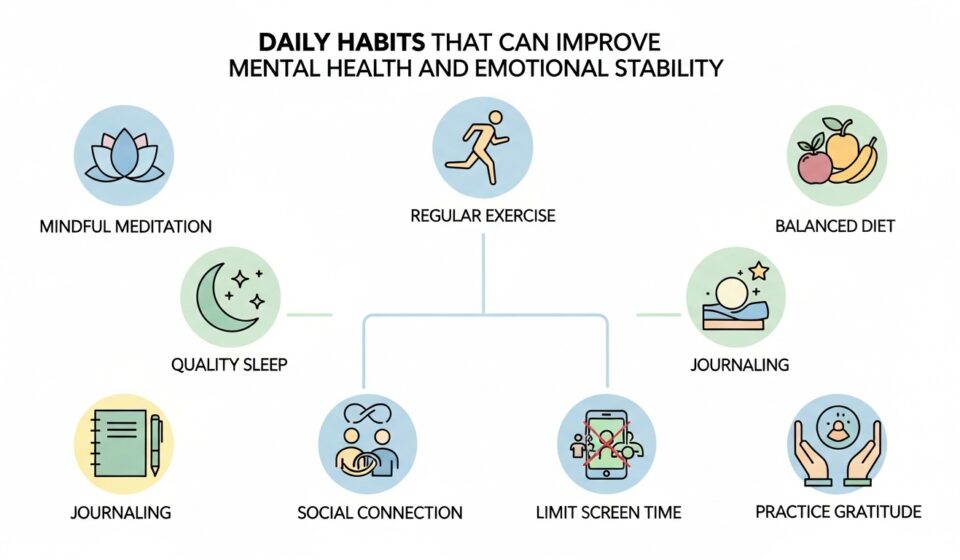

Mental health and emotional stability are just as important as physical health, but they are often ignored in daily life. Stress, overthinking, poor sleep, and unhealthy routines can slowly affect how you feel, think, and react to situations. The good news is that you don’t need major life changes to improve your mental well-being. Small, consistent daily habits can make a big difference over time. In this article, we will explore simple and practical daily habits that can improve mental health and emotional stability.
1. Start Your Day with a Simple Morning Routine
How you start your morning sets the tone for the rest of your day. A calm and structured morning routine can reduce stress and improve focus.
Good morning habits include:
- Waking up at a consistent time
- Avoiding immediate phone use
- Drinking water after waking up
- Doing light stretching or breathing exercises
A stable morning routine helps your mind feel more organized and less overwhelmed throughout the day.
2. Practice Mindful Breathing or Meditation
Mindful breathing and meditation are powerful tools for calming the mind. They help reduce anxiety, control negative thoughts, and improve emotional balance.
How it helps:
- Lowers stress levels
- Improves focus and clarity
- Reduces overthinking
Even 5–10 minutes of deep breathing or meditation daily can significantly improve mental calmness and emotional control.
3. Stay Physically Active Every Day
Physical activity is strongly linked to mental health. Exercise releases endorphins, which are natural mood boosters.
You don’t need intense workouts:
- Walking daily
- Light jogging
- Stretching exercises
- Yoga or simple home workouts
Regular movement helps reduce stress, improves sleep, and increases overall energy levels, which directly supports emotional stability.
4. Maintain a Balanced Diet
What you eat affects how you feel. A healthy diet supports brain function and emotional balance.
Helpful dietary habits:
- Eat regular, balanced meals
- Include fruits, vegetables, and proteins
- Avoid excessive junk food and sugar
- Stay hydrated throughout the day
Poor nutrition can lead to mood swings, fatigue, and irritability, while a balanced diet supports mental clarity.
5. Get Enough Quality Sleep
Sleep is one of the most important factors for mental health. Lack of sleep can increase stress, anxiety, and emotional instability.
Good sleep habits:
- Sleep and wake up at the same time daily
- Avoid screens before bedtime
- Keep your sleeping environment quiet and dark
- Aim for 7–9 hours of sleep
Proper sleep helps your brain recover and manage emotions more effectively.
6. Limit Screen Time and Social Media Use
Excessive screen time, especially on social media, can negatively impact mental health by increasing comparison, stress, and distraction.
Better habits:
- Set daily screen time limits
- Take breaks from social media
- Avoid using phones before bed
Reducing digital overload helps your mind stay calm and focused on real-life experiences.
7. Connect with People Regularly
Human connection plays a key role in emotional stability. Talking to others helps reduce feelings of loneliness and stress.
Ways to build connection:
- Spend time with family
- Talk to friends regularly
- Share your thoughts with someone you trust
Even short conversations can improve mood and emotional support.
8. Write Down Your Thoughts (Journaling)
Writing your thoughts helps you understand your emotions better and reduce mental pressure.
Benefits of journaling:
- Clears negative thoughts
- Improves self-awareness
- Helps track emotional patterns
You can write about your day, feelings, goals, or anything that is on your mind.
9. Practice Gratitude Daily
Gratitude is a simple but powerful habit that improves emotional well-being. It helps shift focus from problems to positive aspects of life.
How to practice:
- Write 2–3 things you are grateful for daily
- Appreciate small wins and moments
- Focus on what is going well in your life
This habit improves positivity and reduces stress and negativity.
10. Take Breaks and Rest When Needed
Constant work without breaks leads to burnout and mental exhaustion. Rest is essential for emotional stability.