
In 2026, digital devices are deeply integrated into daily life. Smartphones, laptops, social media platforms, and streaming apps keep us connected, entertained, and productive. However, constant digital exposure can also affect mental health if it is not balanced properly. Many people do not realize when their screen habits start harming their focus, sleep, and emotional well-being.
A digital detox simply means taking a break from unnecessary screen use to restore mental clarity and improve overall wellness. Understanding the warning signs can help you decide when it is time to unplug and reset your digital habits.
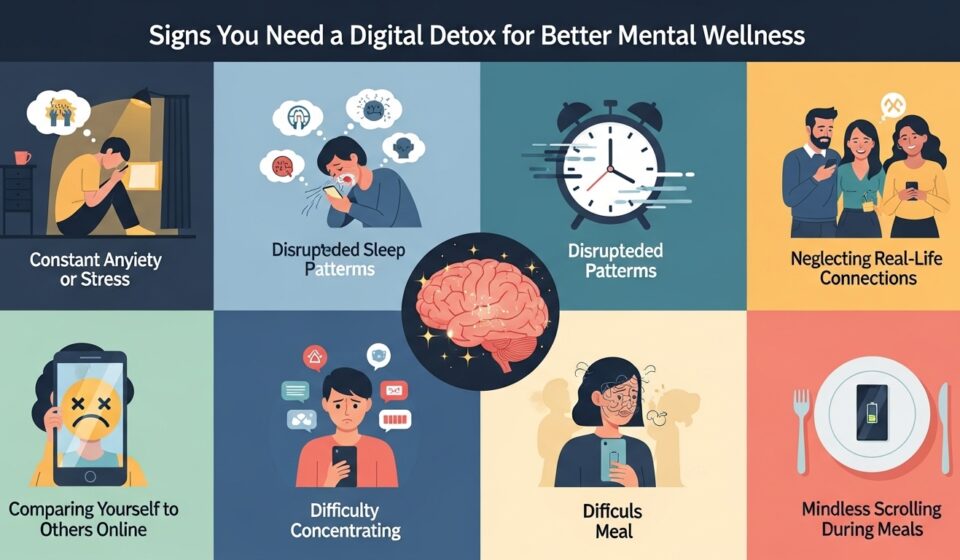
Constant Feelings of Stress or Overwhelm
One of the earliest signs that you may need a digital detox is feeling mentally overloaded. Continuous notifications, messages, emails, and social media updates can create a sense of pressure that never stops.
When your brain is constantly processing information, it becomes harder to relax. You may feel like you are always “on,” even when you are supposed to be resting.
Common signs include:
- Feeling anxious when your phone is not nearby
- Difficulty relaxing without checking your device
- Mental exhaustion at the end of the day
Reducing screen time can help your mind slow down and recover.
Trouble Sleeping or Poor Sleep Quality
Excessive screen time, especially before bed, can significantly affect your sleep cycle. The blue light from screens interferes with melatonin production, which is responsible for sleep regulation.
You may need a digital detox if you notice:
- Difficulty falling asleep
- Waking up tired even after long sleep
- Scrolling on your phone late at night
Improving your nighttime digital habits can lead to deeper and more restful sleep.
Difficulty Concentrating on Simple Tasks
If you find it hard to focus on work, studies, or even conversations, your digital habits might be affecting your attention span. Constant multitasking between apps trains your brain to switch focus rapidly, making it harder to concentrate for long periods.
Warning signs include:
- Easily distracted by notifications
- Inability to finish tasks without checking your phone
- Reduced productivity
A break from digital overload can help rebuild focus and mental clarity.
Increased Social Media Comparison and Anxiety
Social media platforms often show highly curated versions of other people’s lives. This can lead to unhealthy comparisons and lower self-esteem.
You might need a digital detox if you notice:
- Feeling “less successful” after scrolling
- Comparing your life to others frequently
- Anxiety or sadness after using social media
Reducing exposure to curated content can improve emotional balance and self-confidence.
Feeling Emotionally Drained After Screen Time
Instead of feeling relaxed or entertained, you may feel tired or emotionally drained after using your devices for long periods. This is often a sign of digital fatigue.
Symptoms include:
- Irritability after scrolling or gaming
- Loss of interest in offline activities
- Feeling mentally “numb”
Taking regular breaks from screens can help restore emotional energy.
Ignoring Real-Life Relationships
Another strong indicator is when digital life starts replacing real-life interactions. Spending too much time online can reduce the quality of your personal relationships.
You may notice:
- Less face-to-face communication
- Avoiding social gatherings
- Preferring online interactions over real conversations
A digital detox can help rebuild stronger real-world connections.
Physical Symptoms Like Eye Strain and Headaches
Excessive screen use can also affect your physical health. Many people experience discomfort without realizing the cause.
Common symptoms include:
- Dry or tired eyes
- Frequent headaches
- Neck or shoulder pain
- Blurred vision after screen use
These signs suggest your body needs a break from constant screen exposure.
Feeling Addicted to Your Phone
If checking your phone becomes automatic or uncontrollable, it may indicate digital dependency. Many people reach for their phones without a specific reason, just out of habit.
Signs of phone dependency:
- Checking your phone first thing in the morning
- Feeling restless without your device
- Endless scrolling without purpose
A digital detox helps break this cycle and rebuild healthier habits.
Loss of Interest in Offline Activities
When digital consumption becomes too dominant, offline hobbies and activities often lose their appeal. This can reduce creativity and overall life satisfaction.
You may notice:
- Less interest in exercise, reading, or hobbies
- Preferring screen time over outdoor activities
- Feeling bored without digital entertainment
Reconnecting with offline experiences can improve mental well-being.